
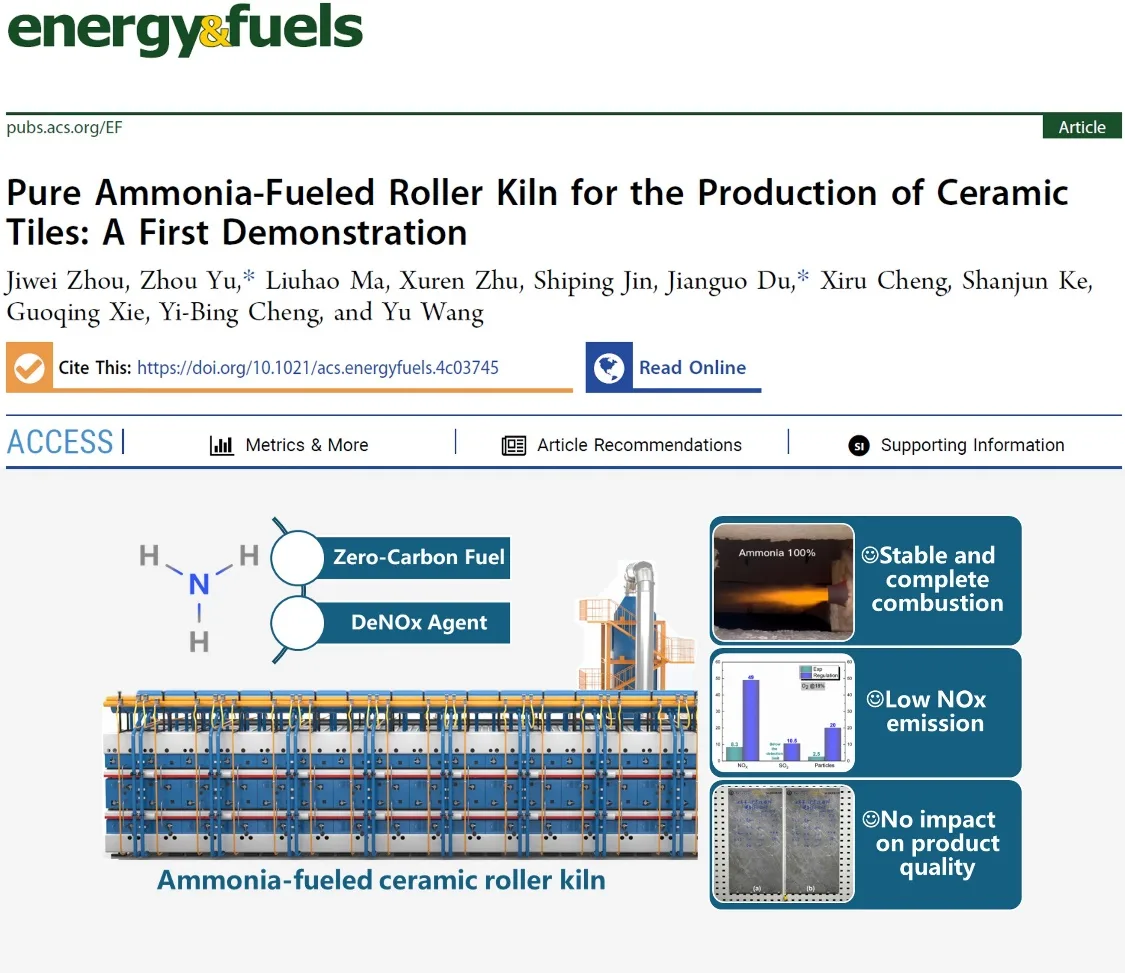
Professor Cheng Yibing’s team at Foshan Xianhu Laboratory recently published a research paper in Energy & Fuels, a leading international energy journal, on the world’s first demonstration of tile production in a pure-ammonia-fuelled roller kiln. The first author is Zhou Jiwei, a PhD student jointly trained by Foshan Xianhu Laboratory and Wuhan University of Technology, supervised by Professor Wang Yu, Deputy Director of the laboratory’s Ammonia–Hydrogen Zero-Carbon Combustion Technology Center. The corresponding authors are Yu Zhou and Du Jianguo, research division heads at the center. Foshan Xianhu Laboratory is the first affiliation.
In recent years, high-temperature manufacturing industries, represented by building ceramics, have faced enormous pressure to cut emissions and carbon. As a hydrogen-rich carrier, ammonia has mature systems for production, storage and transport, and standards and regulations, making it a zero-carbon fuel of great industrial value. The paper reports for the first time the successful application of zero-carbon pure-ammonia combustion in a building-ceramics roller kiln, producing the “world’s first building tile fired with zero-carbon ammonia fuel”. Both the kiln’s flue-gas emissions and the performance of the ammonia-fired tiles meet the relevant national and industry standards.
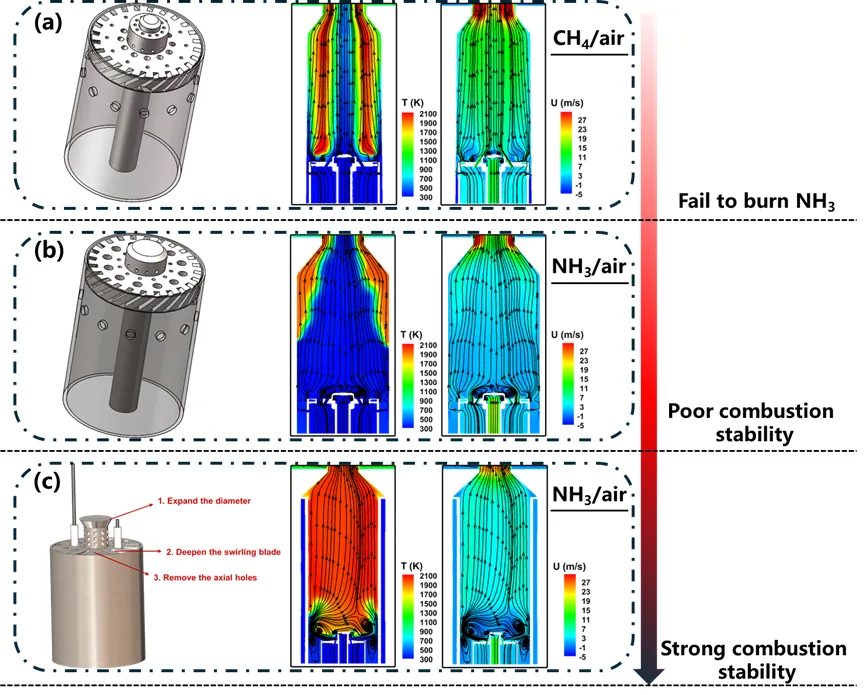
Led by the laboratory’s strategic scientist Professor Cheng Yibing, the R&D team of the Ammonia–Hydrogen Zero-Carbon Combustion Technology Center drew on fundamental ammonia combustion theory and high-fidelity numerical simulation to develop high-throughput stable ignition and flame-stabilization technology. After iteratively designing and optimizing 15 pure-ammonia combustion devices, the team achieved stable ignition and combustion of pure ammonia at 45 kW.
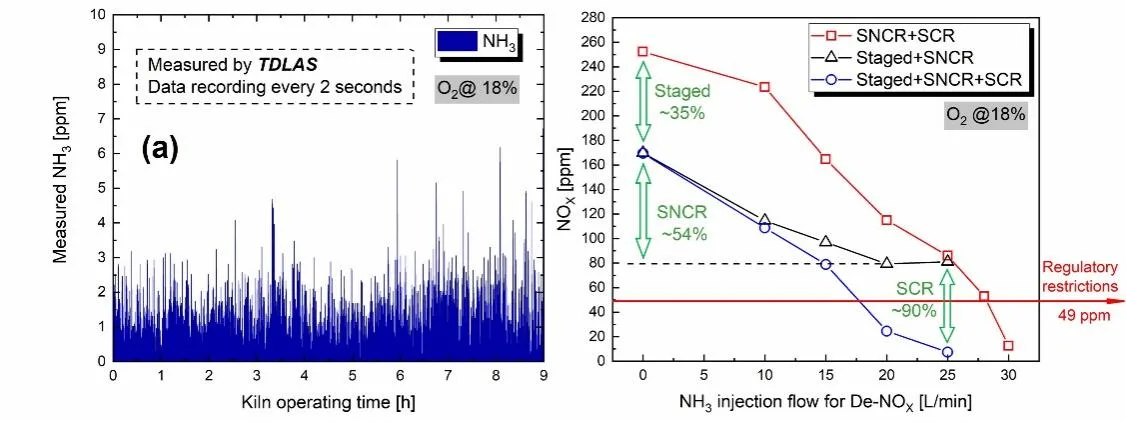
In the demonstration, ammonia leak detection based on laser absorption spectroscopy and trace ammonia-slip monitoring equipment for harsh high-temperature, high-humidity environments enabled monitoring of the entire process of ammonia pipeline transport and combustion, ensuring the efficient and safe use of ammonia. Staged combustion, SNCR and SCR were used together to treat nitrogen oxides, greatly reducing NO/NO2 concentrations in the pure-ammonia flue gas and achieving zero N2O emissions.
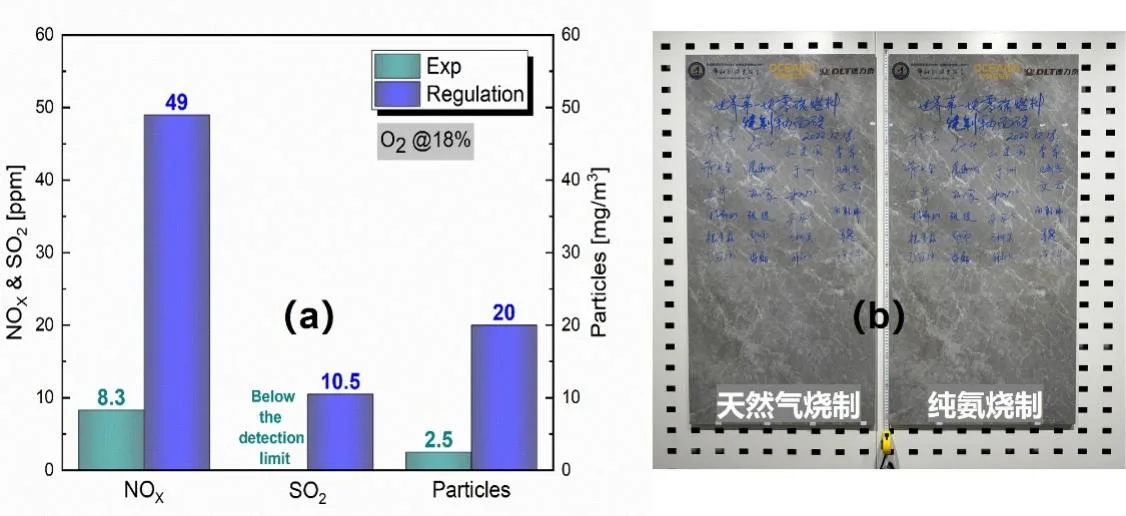
A third-party testing agency sampled and tested the flue gas of the pure-ammonia kiln on site and confirmed that pollutant emissions (nitrogen oxides, sulphur dioxide, particulate matter and others) were far below national and industry standards; NOx concentration was only 17% of the Guangdong ceramics industry emission limit. The glazed tiles fired with pure ammonia showed no black cores or colour differences in cross-section, with normal pattern colours, water absorption of 0.01% and strength of 41.6 MPa, all exceeding the national standard for porcelain tiles.
Building on this work, in September 2024 Foshan Xianhu Laboratory, together with Monalisa Group, Foshan Oceano Ceramics Co., Ltd., Foshan Dalitai Technology Co., Ltd., Guangdong Anqing Technology Co., Ltd. and other companies, brought the world’s first ammonia–hydrogen zero-carbon combustion demonstration production line for the ceramics industry into production. This pioneering work not only verifies the feasibility of applying ammonia–hydrogen zero-carbon combustion to large-scale, continuous industrial kilns and provides new technologies, standards and demonstrations for carbon reduction and zero carbon in the building ceramics industry; it is also expected to drive deep decarbonization of building ceramics worldwide and offers a practical decarbonization route for other high-temperature industries such as thermal power generation and metal processing to reach carbon peaking and carbon neutrality goals.
Paper link:
https://pubs.acs.org/doi/10.1021/acs.energyfuels.4c03745
Foshan Xianhu Laboratory news link
Source: Foshan Xianhu Laboratory website